Eduqas · GCSE · English Literature
Section A (20%) Shakespeare
Master the WJEC Eduqas GCSE English Literature Shakespeare component with this comprehensive guide. Discover how to analyse language, structure, and context to unlock top-band marks, turning complex Elizabethan drama into your highest-scoring section.
- 5 min read
- 2 worked examples
- 4 practice questions
- 8 key terms
Study Notes
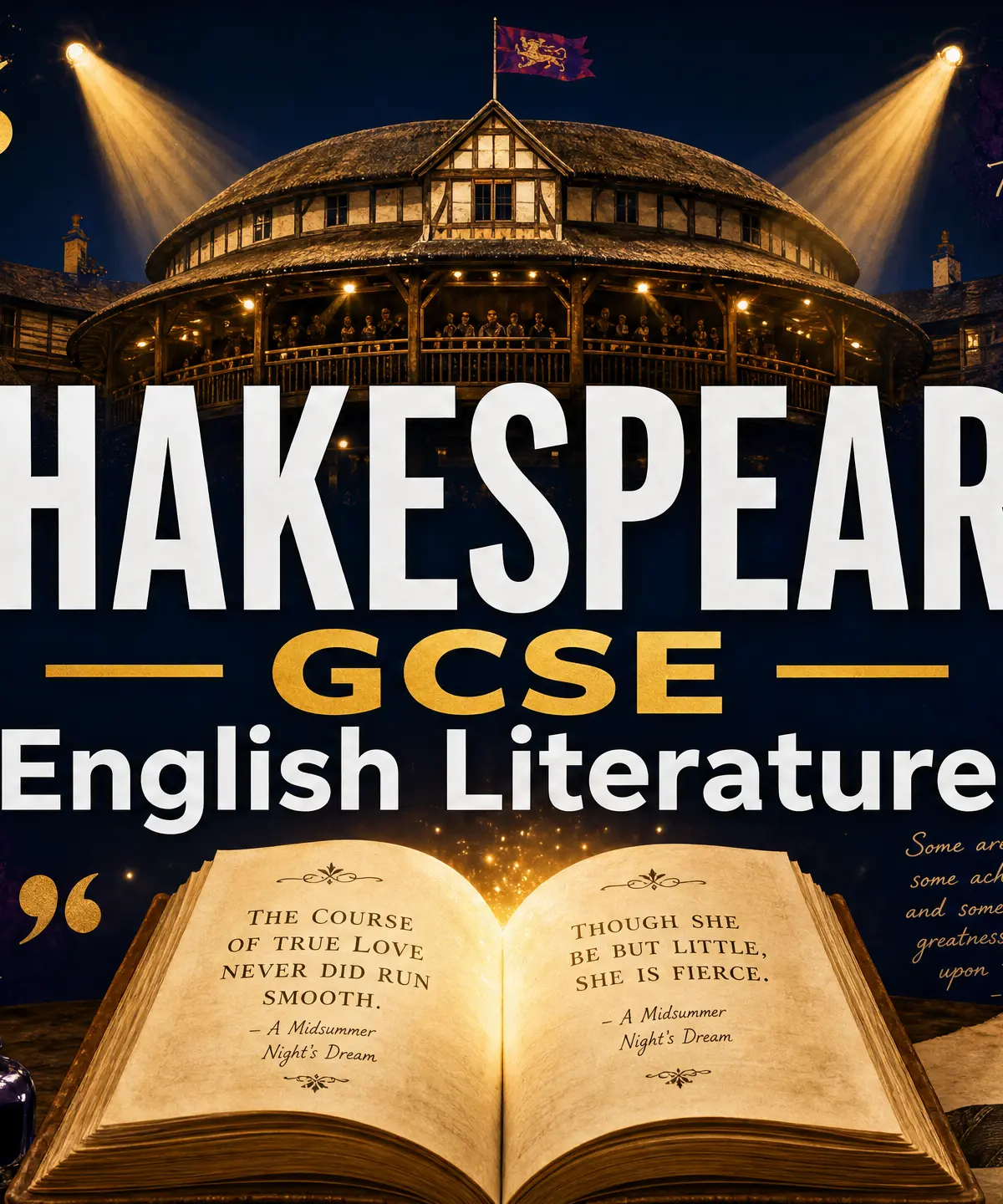
Overview
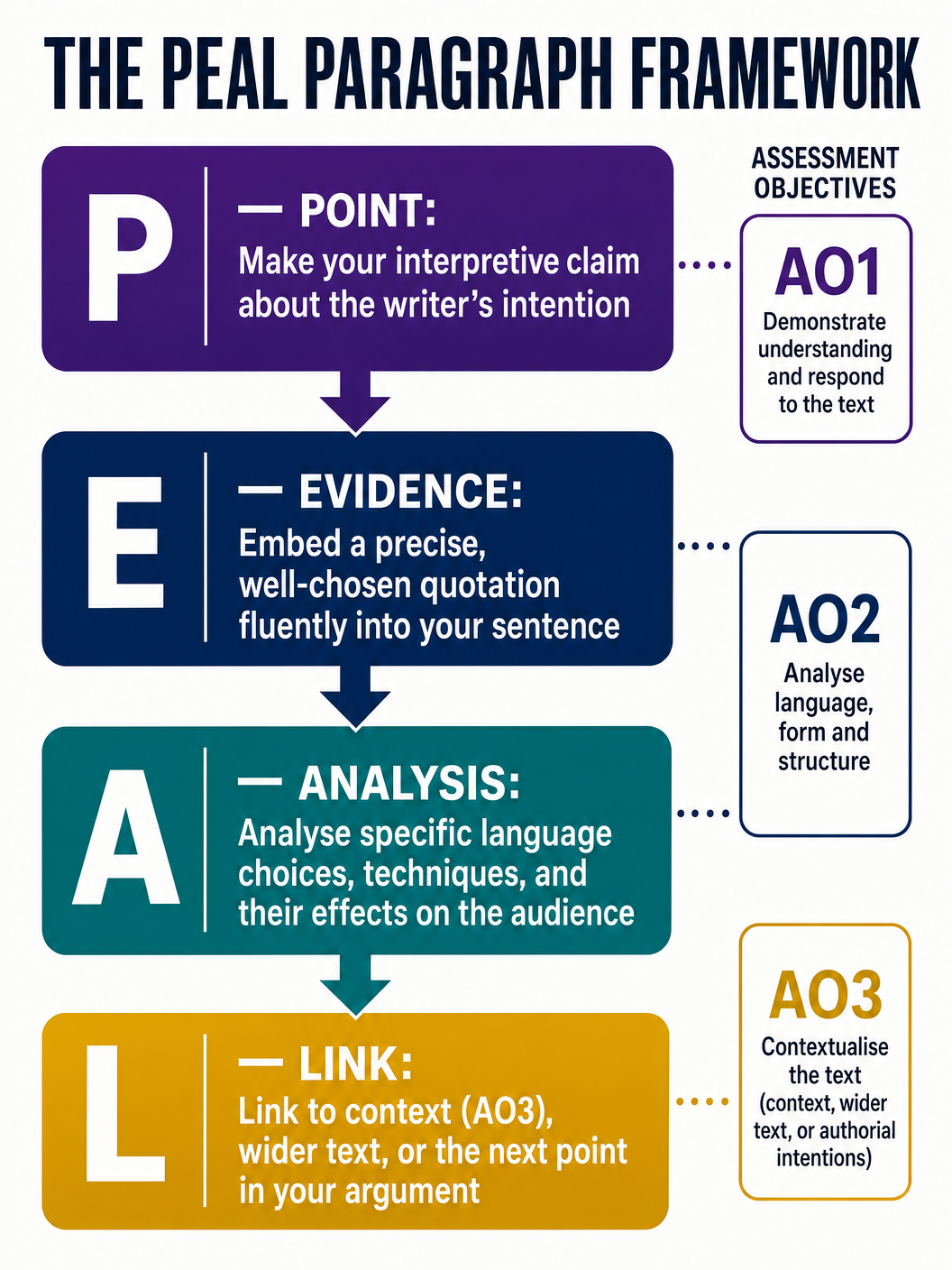
Component 1 of the WJEC Eduqas GCSE English Literature specification (Paper 2.1) demands a sophisticated understanding of Shakespearean drama. Examiners are looking for candidates who can seamlessly blend close textual analysis (AO2) with a broad understanding of the play's themes (AO1) and its historical context (AO3). The 34-mark question requires you to balance your response between a printed extract and your knowledge of the wider text. Top-band responses demonstrate a conceptualised approach, exploring alternative interpretations and showing exactly how Shakespeare's methods shape the audience's response.

Key Themes Across Shakespeare
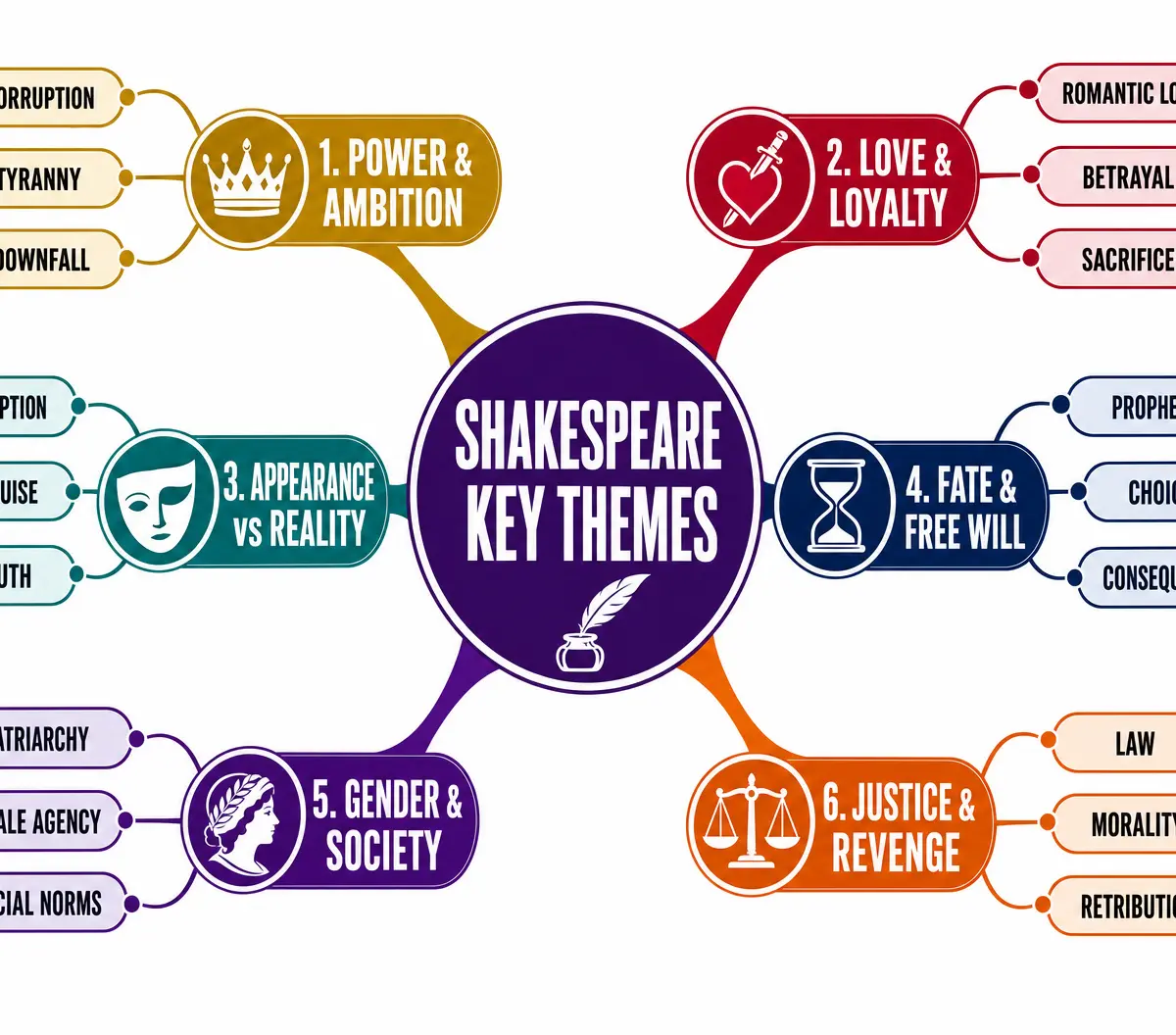
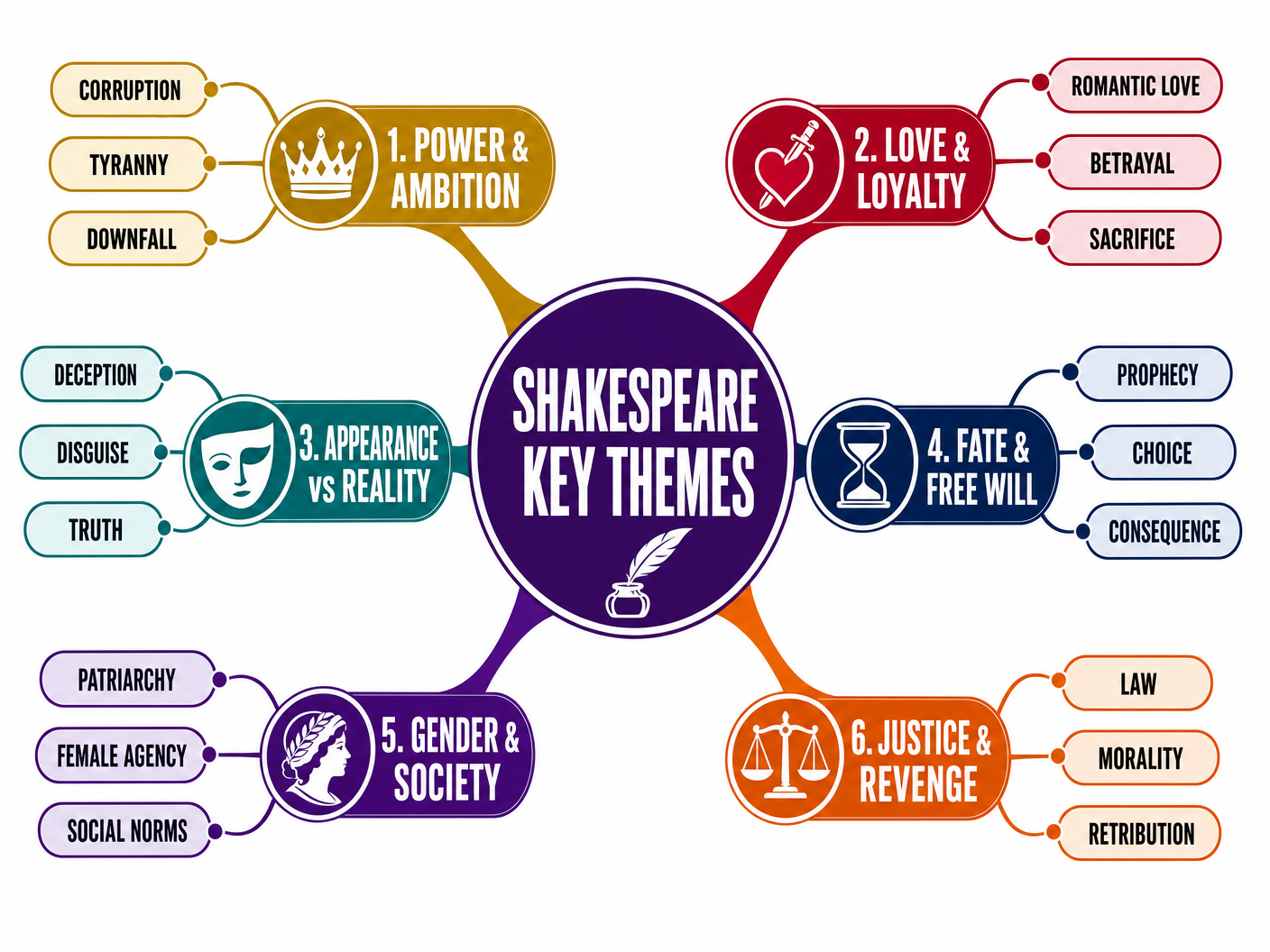
Theme 1: Power and Ambition
Shakespeare frequently explores the corrupting nature of unchecked ambition and the fragility of political power. Whether it's a tragic hero's fatal flaw (hamartia) or a Machiavellian villain's scheming, power is rarely held securely. Examiners reward candidates who link this theme to the divine right of kings and the political anxieties of Elizabethan/Jacobean audiences.
Key Quotes:
- "Vaulting ambition, which o'erleaps itself" (Macbeth) - Shakespeare uses the metaphor of a rider overestimating a jump to foreshadow inevitable downfall.
- "Uneasy lies the head that wears a crown" (Henry IV) - Personification highlights the psychological burden of authority.
Theme 2: Appearance vs Reality
Deception, disguise, and manipulation are central to Shakespeare's dramatic structure. Characters frequently hide their true intentions behind a "false face." This theme allows for excellent AO2 analysis of dramatic irony, as the audience often knows the truth while the characters on stage remain deceived.
Key Quotes:
- "Look like the innocent flower, but be the serpent under't" (Macbeth) - The juxtaposition of natural innocence with biblical treachery.
- "I am not what I am" (Othello) - Iago's paradox perfectly encapsulates the theme of deceptive appearances.
Character Dynamics
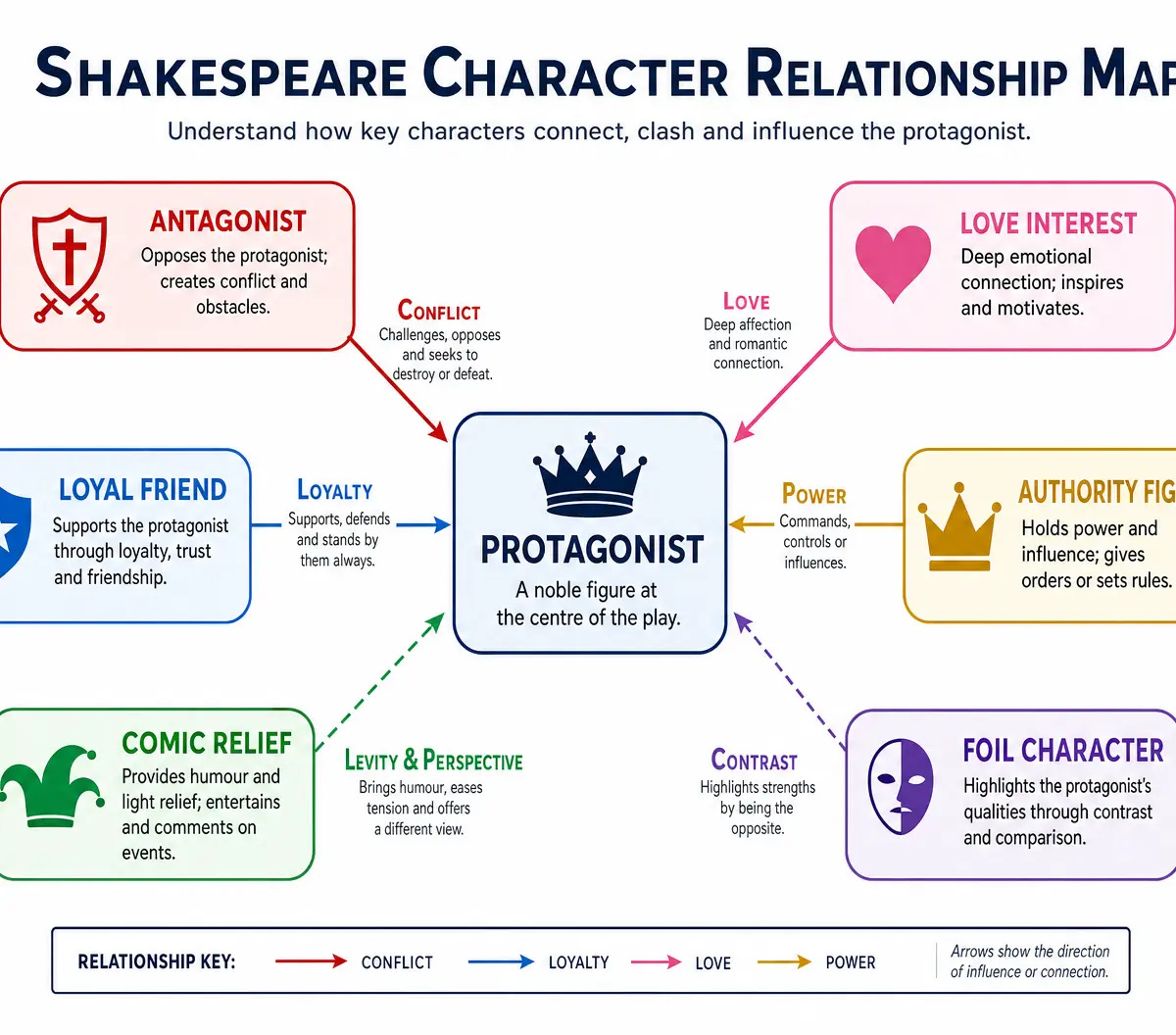
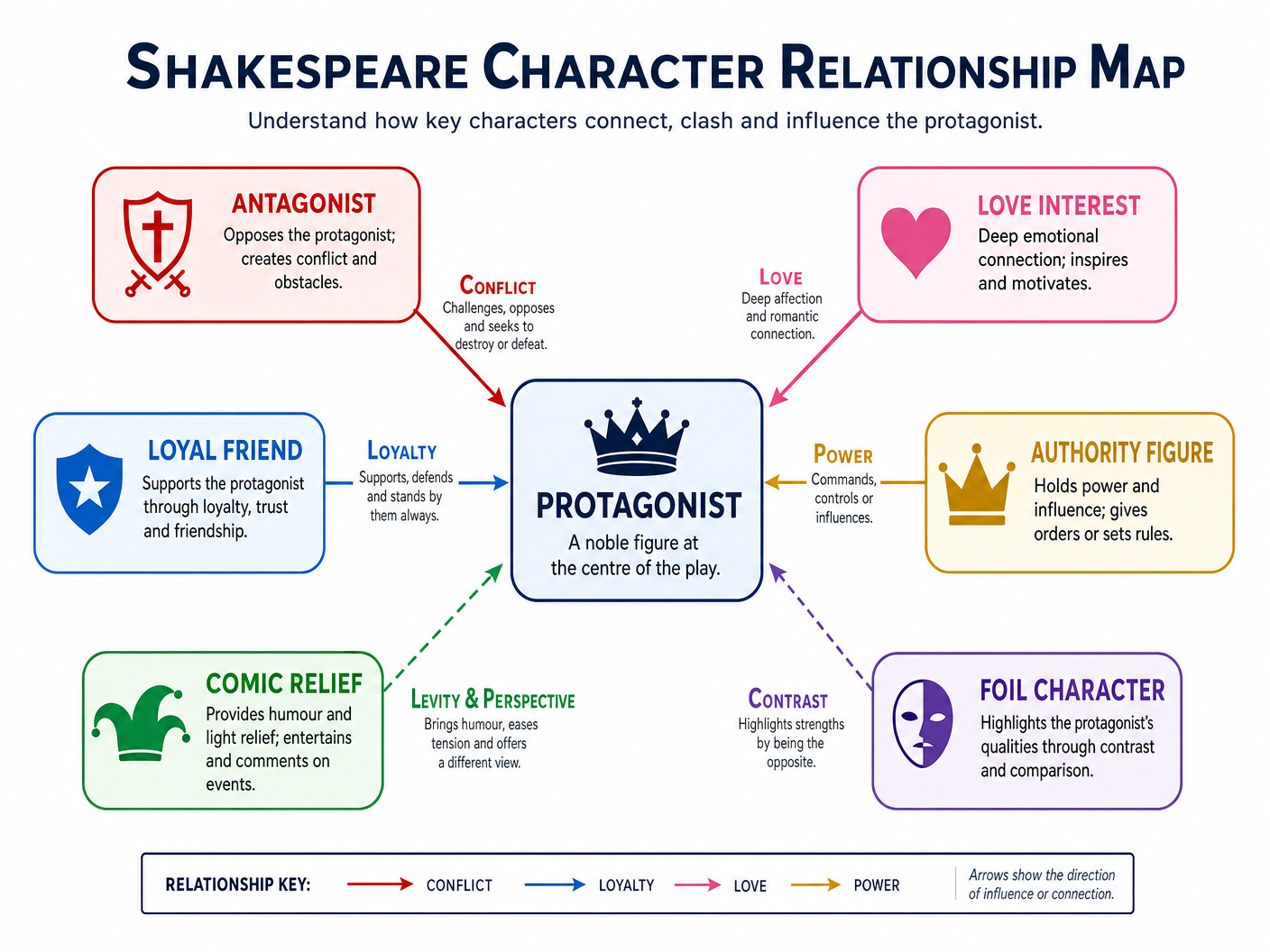
Understanding character functions is crucial for AO1. Characters are constructs used by Shakespeare to explore ideas, not real people.
The Tragic Hero
Role: The protagonist whose fatal flaw leads to their downfall.
Key Traits: Noble birth, initial greatness, hubris (pride) or blind ambition.
Character Arc: Starts in a position of respect, makes a fatal error in judgement, experiences a reversal of fortune (peripeteia), and ultimately faces destruction.
The Machiavellian Antagonist
Role: To manipulate the protagonist and drive the conflict.
Key Traits: Cunning, deceptive, lacking moral constraints, often shares their plans directly with the audience via soliloquy.
Writer's Methods (AO2)
Examiners heavily reward the analysis of specific methods. Avoid "feature spotting"; always explain the effect.
- Soliloquy: Allows characters to reveal their inner psychological turmoil directly to the audience, building empathy or horror.
- Iambic Pentameter: The regular rhythm (da-DUM da-DUM) suggests order and control. When Shakespeare breaks this rhythm, it often signifies madness, chaos, or supernatural elements.
- Dramatic Irony: Creates tension and pathos when the audience possesses knowledge the characters lack.
- Extended Metaphor: Sustained imagery (e.g., disease, blood, clothing) used to reinforce thematic ideas across multiple scenes.
Context (AO3)
Context must be integrated, not bolted on. Examiners want to see how context shapes meaning.
- The Great Chain of Being: The belief in a strict, God-ordained hierarchy. Disrupting this chain (e.g., regicide) leads to chaos in nature.
- Patriarchal Society: Women were expected to be subservient. Female characters who defy these expectations (Lady Macbeth, Juliet) would have been shocking to contemporary audiences.
- Theatrical Context: Plays were performed at the Globe in daylight, meaning language had to set the scene. The presence of groundlings meant plays needed a mix of high philosophy and low comedy.
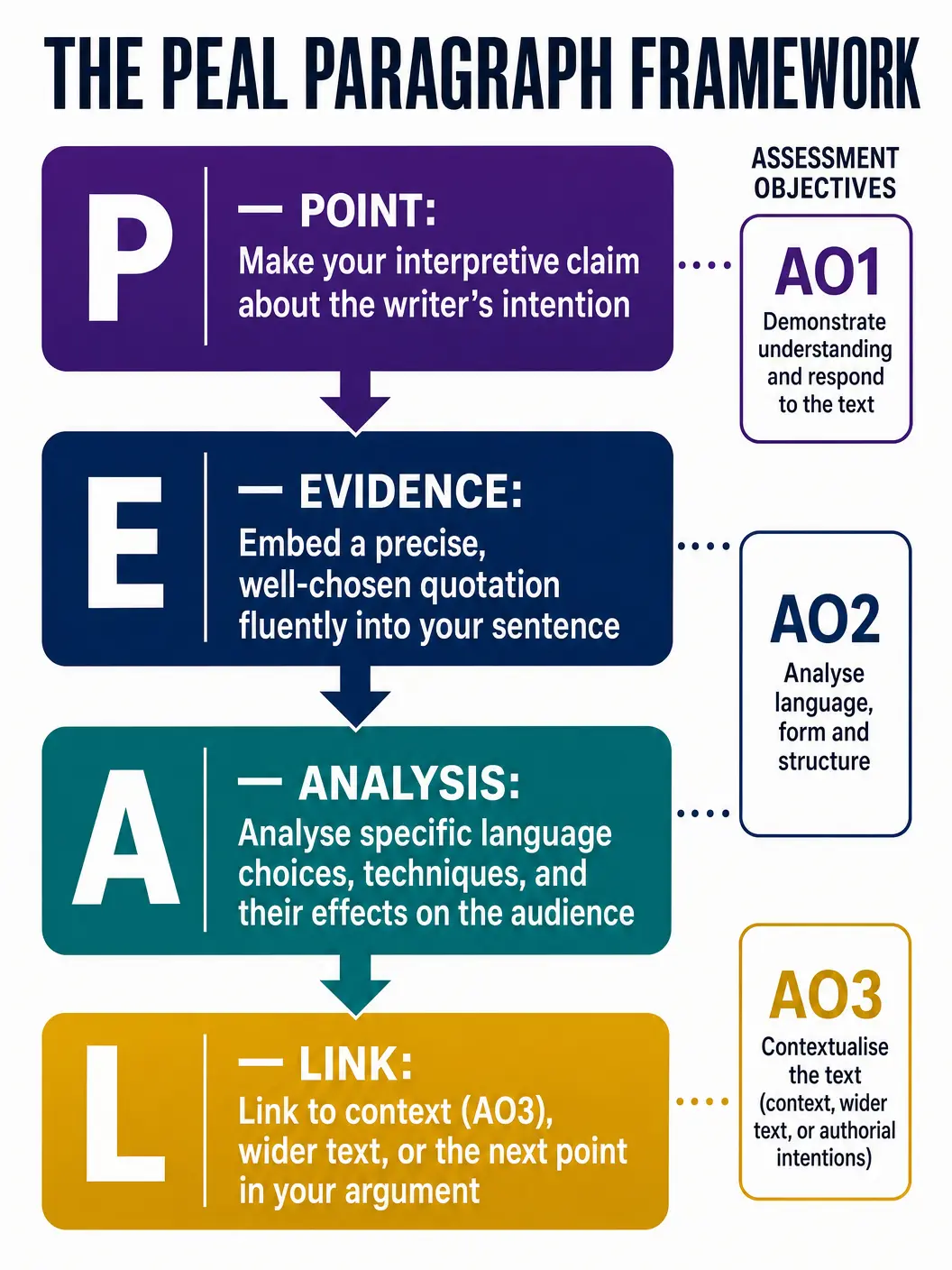
Visual Resources
3 diagrams and illustrations
Interactive Diagrams
1 interactive diagram to visualise key concepts
Conceptual Flow Outline
The typical arc of a Shakespearean Tragedy
Worked Examples
2 worked examples — open one to explore the question and available guidance.
Practice Questions
Test your understanding — click to reveal model answers
Starting with this extract, explore how Shakespeare presents the consequences of guilt. Write about:
- how guilt is presented in this extract
- how guilt is presented in the play as a whole (30 marks + 4 AO4)
Hint: Consider how guilt manifests physically (hallucinations, sleeplessness) and how it isolates characters from each other.
Explore how Shakespeare presents the relationship between the protagonist and the supernatural. (30 marks + 4 AO4)
Hint: Does the supernatural force events, or merely reveal what the character already desires?
Starting with this extract, explore how Shakespeare presents conflict. (30 marks + 4 AO4)
Hint: Conflict isn't just physical fighting. Think about psychological conflict, verbal sparring, and societal conflict.
Explore how Shakespeare uses setting to create mood and atmosphere. (30 marks + 4 AO4)
Hint: Remember that the Globe theatre had no lighting or sets. Shakespeare had to build the setting using language.